A Helping Hand, Not a Master Switch: Digital Access for Older Relatives
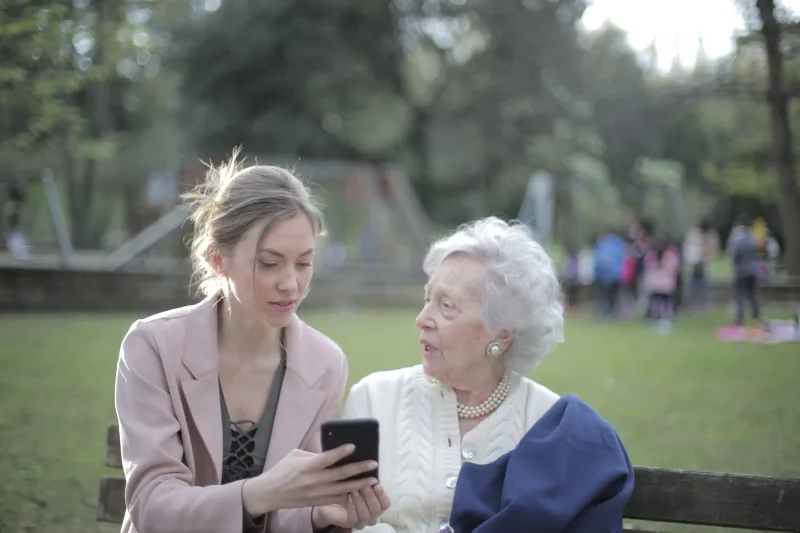
When an older relative asks for help with an online bank account, an energy tariff or the NHS App, the request is often practical: please help me get this done. The risk is that practical help can drift into something larger. A family member begins holding passwords, receiving security codes and managing accounts, and the older person's independence quietly narrows. A calmer approach is to treat digital access as a shared arrangement with clear boundaries, not a master switch held by one person.
Start with the task, not the password
Begin by asking what your relative actually wants help with. They may be comfortable logging in themselves but need assistance reading a bill. They may want someone to make a payment once, not to manage the account. They may be happy for a family member to see their NHS App appointment letters but not their full health record.
Write down the answer in plain language. A simple access map can list each account or service, the task that needs help, who is helping, and when the arrangement will be reviewed. For example: energy account, help checking the quarterly bill, daughter to sit alongside once a quarter. Online banking, help with a single transfer, son to assist in person when asked. NHS App, help booking appointments, relative to use proxy access if the GP practice agrees.
This map is not a legal document, and it does not replace a lasting power of attorney where one is needed. It is a family record of consent. It should be reviewed together, not kept hidden.
Use the least access that works
A useful principle is least privilege: give the smallest amount of access that allows the task to be done. Sitting beside someone while they log in is different from holding their password. Receiving a monthly statement by post is different from having full online account access. A bank's own third-party access or trusted-contact arrangements are different from sharing a PIN or security code.
For utilities, council tax and similar household accounts, ask whether the provider offers a named contact or authorised representative arrangement. For the NHS App, ask the GP practice about proxy access, which allows a trusted person to see parts of another person's record or act on their behalf where appropriate. For banking, speak to the bank about its own access options rather than improvising with shared passwords.
Password managers can help families keep credentials secure, but they should be set up with the older person's knowledge and control. If your relative prefers a paper record, discuss the risks and agree a safer place than a loose drawer. The aim is not to impose a system; it is to reduce the chance of loss, fraud or confusion while preserving choice.
Make two-factor authentication a shared safeguard
Two-factor authentication adds a second step at login, often a code sent by text message or generated by an app. It is a valuable protection, but it can create new dependence if every code goes to a relative's phone. The older person may then need to call someone simply to read their own email or check a bill.
Where possible, set up two-factor authentication on the older person's own device and keep backup codes in a secure place they can reach. If a family member is named as a backup contact, record that decision and explain what it means. Avoid moving a relative's phone number to someone else's device without clear consent. For banking, use the bank's official arrangements. For email and password managers, consider an authenticator app with a recovery plan that the older person understands.
Security codes should never be forwarded casually by text or read aloud in a hurry. Agree in advance how urgent requests will be handled and how your relative can verify that a request is genuine.
Record emergency contacts without handing over the keys
An emergency contact list is not the same as full account access. Keep a simple index of who to call: GP practice, bank, energy supplier, water company, council, a neighbour, and the family members who usually help. Note where key documents are kept, such as insurance details or correspondence about benefits. Do not list passwords in the same place.
The index should answer a practical question: if your relative is admitted to hospital, who needs to know, and what can wait? It should also make clear which tasks require the older person's consent or a formal legal authority. This distinction protects both dignity and decision-making.
Build in a regular review
Permissions age. A family member may move away, a relationship may change, or an older relative may become more confident online. Review the access map every three to six months, and after any hospital stay, house move or change in care. Ask three questions: does this access still serve the person, is it still the minimum needed, and does everyone still agree?
If your relative's ability to make decisions changes, do not simply expand access by habit. Seek advice about lasting powers of attorney, deputyship or the appropriate bank and NHS processes. Formal authority has its place, but it should follow a conversation and proper legal steps, not a quiet transfer of passwords.
A steadier kind of help
The goal is not to keep an older relative away from technology, nor to take it over on their behalf. It is to make online life safer and more manageable while leaving control where it belongs. A shared access plan, modest permissions, protected security codes, clear emergency contacts and a regular review can turn digital help into a calm partnership. That is a more compassionate arrangement than a password kept in a drawer, and a more durable one too.